Seville

Language courses
in Seville

Build my quote

Language course

Seville

Spain

  • Climate : July and August: highs routinely above 35 °C
  • Airport : Seville, 10 km away

Strengthen your Spanish in a historic and cultural city, with continuous immersion.

Why choose Seville to learn Spanish?

Seville highlights a strong cultural heritage, useful for anchoring the learning of Spanish.

You move forward at a sustained but controlled pace, between study time, real exposure to the language and clear organisation.

Seville at a glance

Seville gives a good balance between culture and practice, useful for making Spanish more natural day to day.

Local weather

Local weather

Forecast loading

The weather is displayed automatically according to the city.

--:--

Destination

Local time

--:--

Local time

Your time zone

The city in brief


Population

688 714 inhabitants


Living environment

A large Andalusian heritage city, marked by its gardens, its historic centre and the Guadalquivir.

Map & landmarks

The city of Seville, capital of Andalusia, lies in the south-west of Spain, 60 km from the Atlantic coast. The city is crossed from north to south by the river Guadalquivir, while overlooking a very fertile and richly cultivated plain. Seville is 541 km from Madrid, the nearest large cities being Cadiz, Cordoba and Granada. Seville enjoys a Mediterranean climate, with particularly hot summer spells, often above 40°C in August, and mild winters. Rainfall is fairly rare, mainly concentrated between the months of October and April.

The map is temporarily unavailable.

City life and landmarks

history & culture

The history of Seville gives it the status of a crossroads between different civilisations. History has it that the city was founded in the 8th century BC by the Tartessians. The city has seen many peoples pass through, from the Phoenicians to the Visigoths. The Muslim invasion of 711 gave Seville an important economic, political and military role. In 1212, the Catholic reconquest allowed Ferdinand III to retake Seville, which developed thanks to the Court and the irrigation techniques brought by the Arabs. A starting point for maritime discoveries, Seville is a city of art with a strong popular culture carried by its history.

things to do / to see

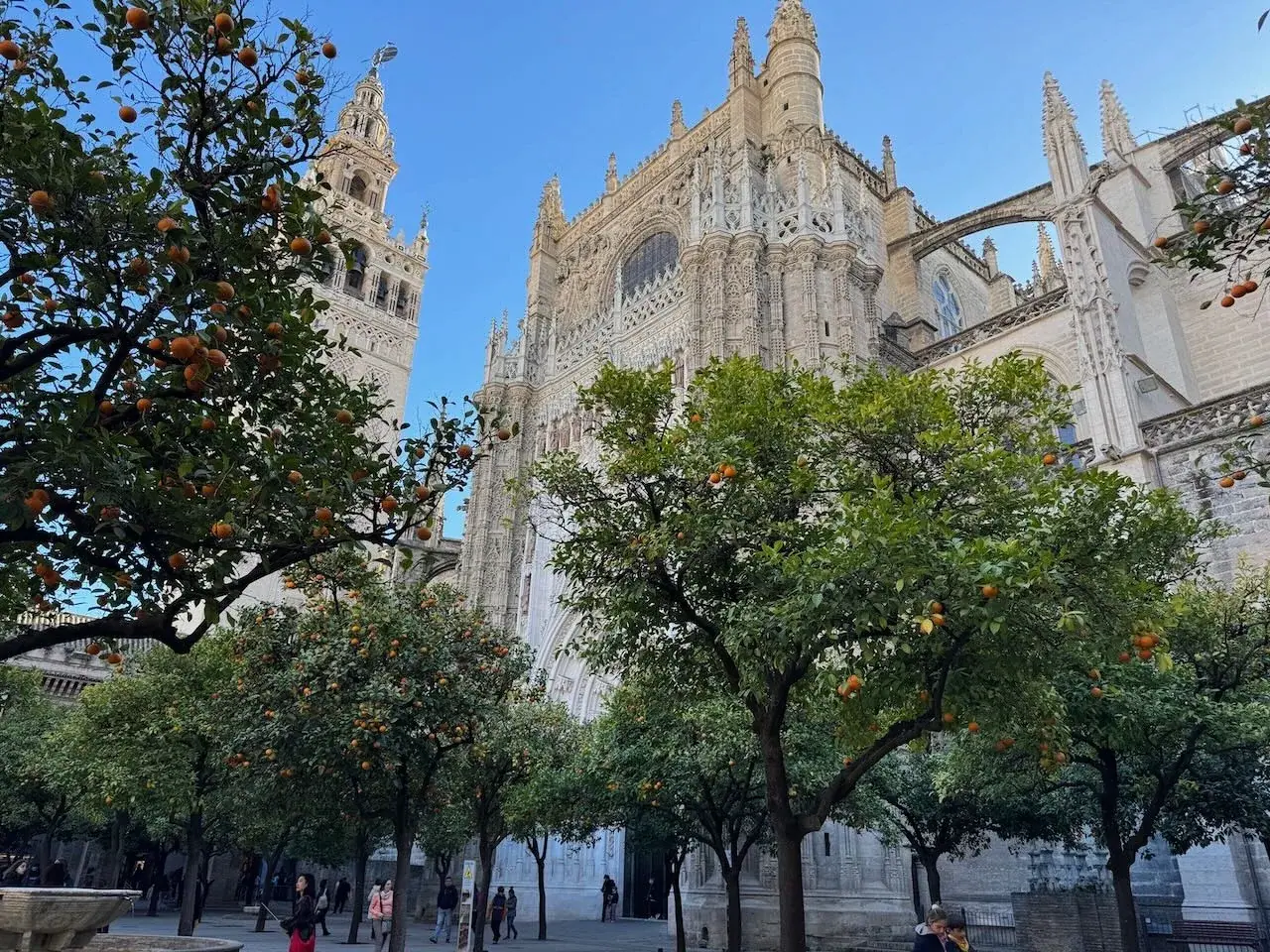
The environmental heritage of Seville is mainly to be found on the banks of the Guadalquivir. Greenery is very present, despite the dry climate, with many parks and gardens: the gardens of the Alcázar, the Paseo de Catalina da Ribera... Civil and religious buildings are not lacking either: the 15th-century cathedral, the walls of the Alcázar palace, the architecture of the Santa Cruz and Macarena districts, the Fine Arts Museum... The many festivities organised by the city have their origin in religious tradition, particularly during Holy Week. Bullfighting during the Feria de Abril is an integral part of the cultural heritage, as much as nightlife and football.

the city in practical terms

The 1992 Universal Exhibition made it possible to develop Seville's transport network. San Pablo airport is connected to the largest Iberian and European airports. A high-speed rail line links Seville to Madrid. For shopping, head to the craft areas of Calle Alemanas, Chapineros, Zurradores and Chicarreros. The most modern shops are in Calle Asunçión, in the Los Remedios district.

Find my language course in Seville

All our language stays