Why choose Cork to learn English?
Cork remains human in scale, which helps to structure the learning of English day by day.
The format stays clear: lessons, practice outside class and independence follow on naturally, without weighing the stay down.
Language course
Cork
Ireland
Make progress in English in a human-scale city, with a stable and effective learning pace.
Cork remains human in scale, which helps to structure the learning of English day by day.
The format stays clear: lessons, practice outside class and independence follow on naturally, without weighing the stay down.
Cork has a liveable urban feel that makes English easier through concrete and regular situations.
Local weather
Forecast loading
The weather is displayed automatically according to the city.
Destination
Local time
Local time
Your time zone
224 004 inhabitants
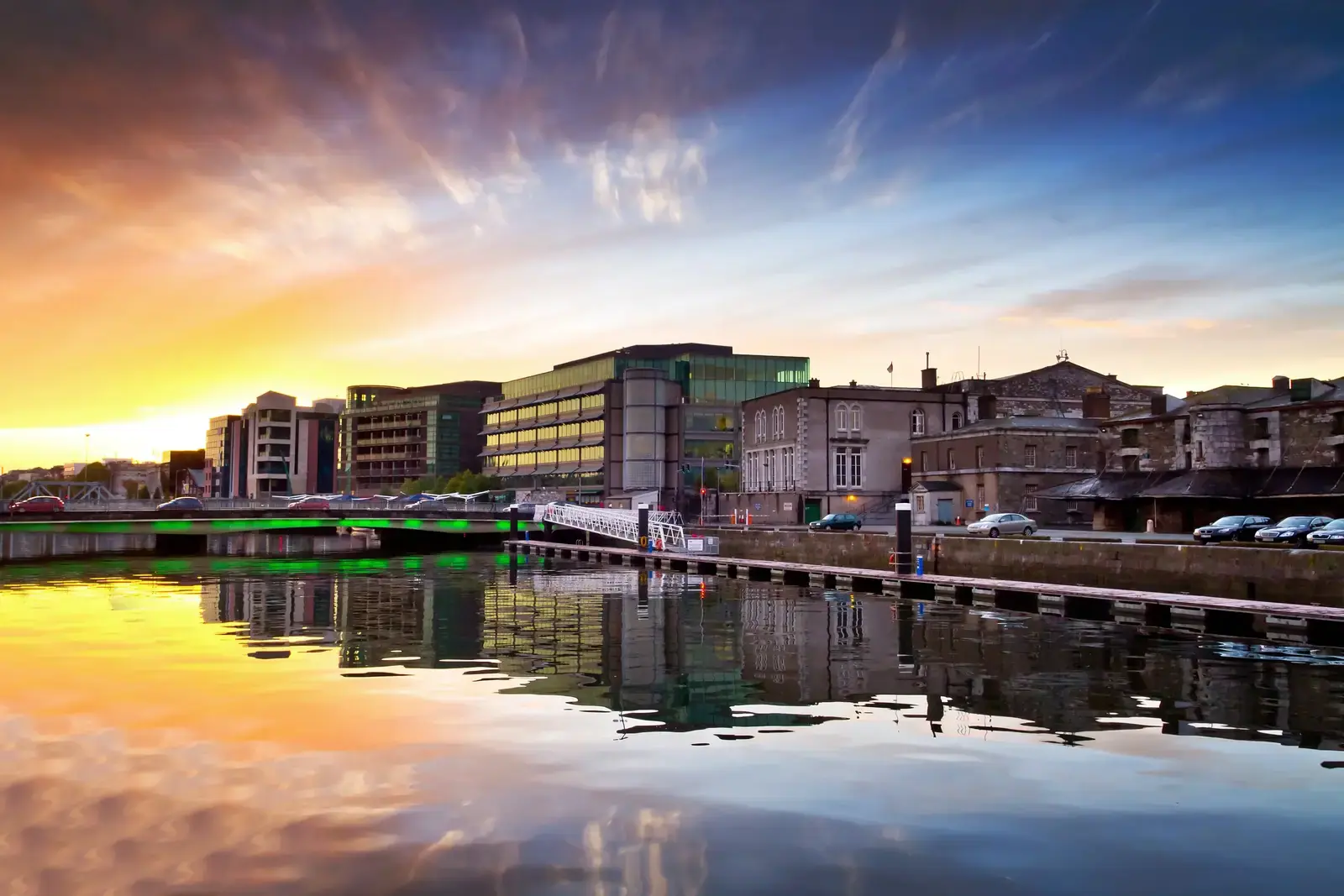
A compact port city, between the River Lee, the English Market, local culture and access to the harbour.
The city of Cork is in the Irish county of the same name, in the south-east of the island. The island's third city in terms of population is 256 kilometres from the capital, Dublin. It is crossed by the River Lee, which forms, in its middle, an island corresponding to the main part of the city centre. Cork Harbour is the second largest natural seaport in the world, behind that of Sydney. Cork enjoys an oceanic climate, both damp and changeable, with a high level of rainfall. Despite the many foggy days, Cork has the highest rate of sunshine in Ireland.
The birth of the ancient city of Cork goes back to the 4th century, with the establishment of a monastery by Saint Finbarr on its present site. Part of the ramparts still visible today also bears witness to that distant era: the city developed mainly by the sea but, in return, suffered Viking raids during that period. In 1185, Cork known as "the rebel", was then annexed by the English, but a constant climate of hostility persisted between them for centuries, with, in 1690, the bloody repression of James II's Catholics by William of Orange's Protestants. The city was then devastated during a period of famine in the 18th century ... It is therefore a city with a tumultuous and fascinating past, historically unsubdued and having always claimed the role of the true capital of Ireland.
The natural environment of Cork is exceptional and green everywhere, from Dursey Island to the charming villages that overlook the coves and their impressive cliffs. In the architecture of the city itself, the historic cultural and religious heritage of Cork is found through monuments such as St Finbarr's Cathedral, which dates from 1865 and was built on the exact site of the original chapel. The museum in Cork also takes up the theme of the Titanic, which made its last stop at Cobh nearby, about 15 kilometres from Cork. Among the picturesque and unusual museums, there is notably Cork City Gaol: a former prison turned into a museum, or the Cork Butter Museum ... Cork is today a city known for being particularly dynamic, full of lively pubs, trendy clubs and local restaurants, and every year it hosts festive events such as the Cork Jazz Festival.
It is also possible, however, to make the journey by ferry from Europe, for those wishing to dock in the famous Cork Harbour. The city is served by around twenty bus routes and the cost of living there is slightly lower than in Paris. On the shopping side, the main thoroughfare of St Patrick Street is particularly lively, offering countless choices of shops for all tastes. The English Market food market is also held not far from the city centre, and offers the chance to discover typically Irish specialities.
1 school available