
Edinburgh landscapes - Move and Study

Language courses
in Edinburgh

Build my quote

Language course

Edinburgh

Scotland

  • Climate : in summer, rarely above 22 °C
  • Airport : Edinburgh, 9 km away

Work on your English in a historic capital, with a solid environment for making lasting progress.

Why choose Edinburgh to learn English?

Edinburgh combines capital-city status and historical depth, a stable setting for making progress in English.

You move forward at a sustained but controlled pace, between study time, real exposure to the language and clear organisation.
Edinburgh at a glance

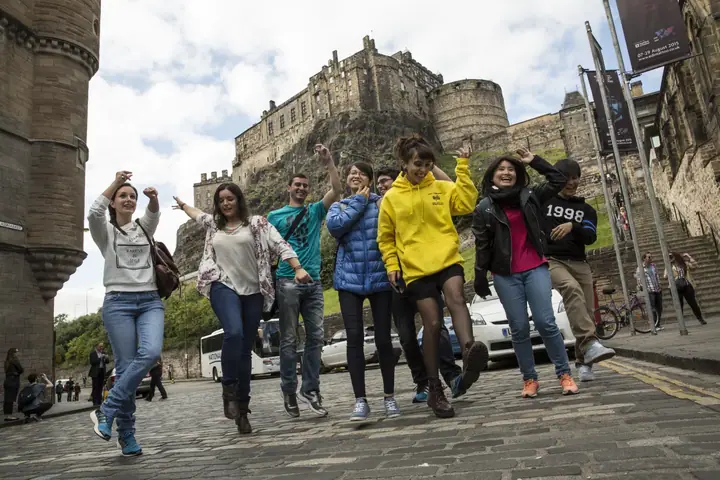
Edinburgh combines historical depth and a student setting, good for making steady progress in English.

Local weather

Local weather

Forecast loading

The weather is displayed automatically according to the city.

--:--

Destination

Local time

--:--

Local time

Your time zone

The city in brief


Population

514 990 inhabitants


Living environment

Scottish capital, between the old town, the castle, hills, festivals, museums and student districts.

Map & landmarks

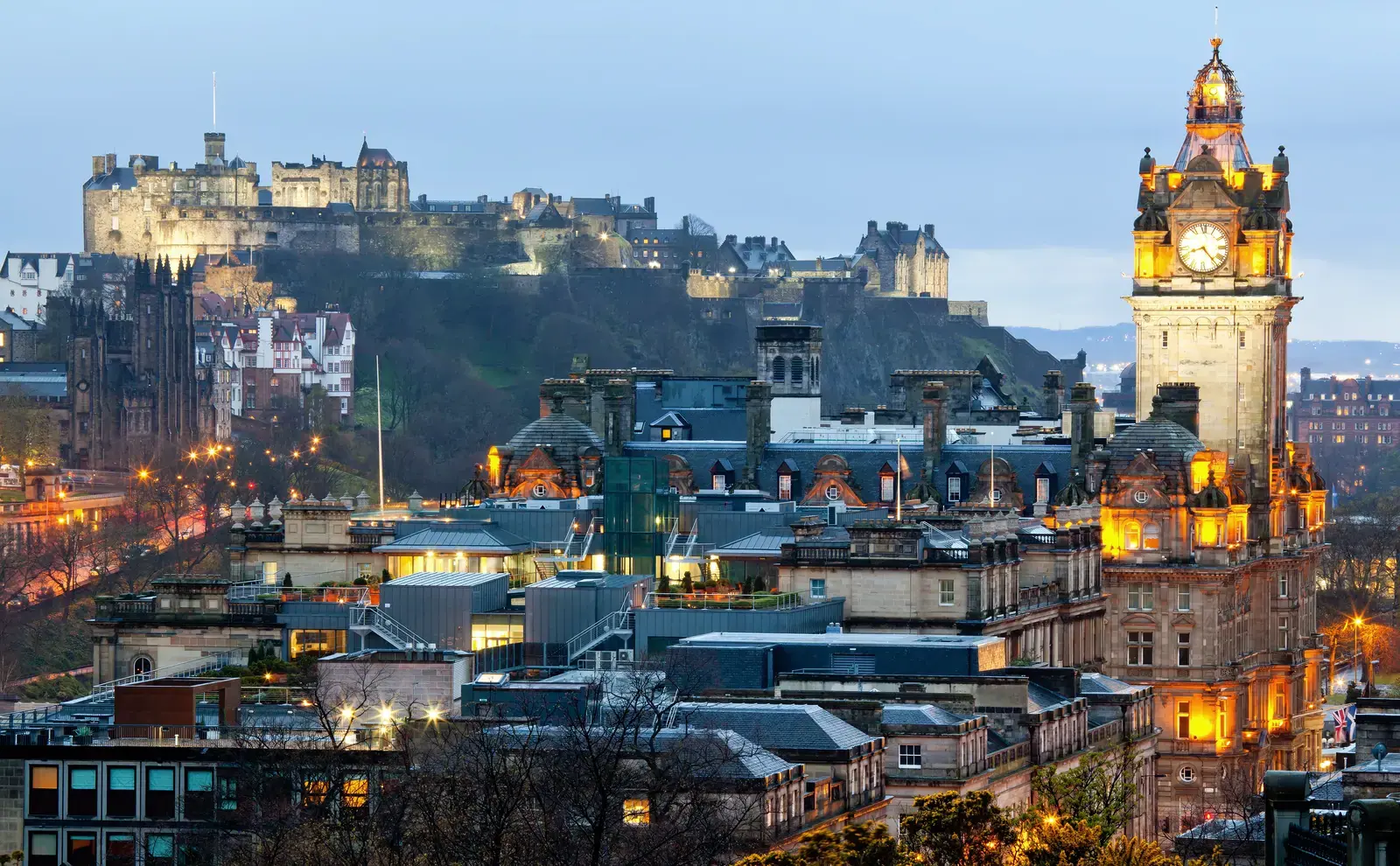
The city of Edinburgh lies on the shores of the wide Firth of Forth estuary, which opens onto the North Sea. Edinburgh is 87 km west of Glasgow and 665 km north of London. The hills on which the Scottish administrative capital stands offer a unique panorama over Edinburgh's various districts: the city centre, the Old Town, the New Town and its port, Leith, 3 km from the city centre. The oceanic climate is marked by relatively mild winters and cool summers. Humidity is high, regularly bringing frequent fog.

The map is temporarily unavailable.

City life and landmarks

history & culture

Human occupation of this territory goes back to the Bronze Age and, although the Romans reached the Lothian in the 1st century, the inhabitants remained culturally Picts, Britons and Scots. In 638, the Angles of Northumbria annexed the south-east of the territory. In the 12th century the foundations of the Old Town were laid: a stone castle whose first curtain wall was later built in 1450. The union of the Scottish and English crowns in 1707 slowed the economic and artistic development of Edinburgh, which was also a major centre for the creation and spread of Enlightenment ideas. The 19th century, for its part, was the century of Edinburgh's population growth, driven in particular by the arrival of many Irish people fleeing the famine ...

things to do / to see

Among the best-known natural settings of Edinburgh and its surroundings are the Firth of Forth estuary and the Pentland Hills regional park, which covers part of the hills around the city. Once there, you can walk the paths leading to the impressive Castle Rock, or wander the charming, winding streets of the Old Town, home to picturesque shops and lively pubs, an immersive experience worth having. These areas have also been UNESCO World Heritage sites since 1995, and are home in particular to Holyrood Palace, St Giles' Cathedral, the Royal Museum of Scotland and the National Gallery ... Rugby is also a widely followed sport in Edinburgh as everywhere in Scotland, and experiencing a live match can be an intense and rewarding experience. Edinburgh also holds in August the International Festival of the Arts, of books and of film, as well as the festival of festive arts and even of military music!

the city in practical terms

Edinburgh-Turnhouse international airport is 8 kilometres from the city centre, to the west. The main railway station is Waverley, in the heart of the Scottish capital near Princes Street Gardens. An efficient bus network serves the city while awaiting a tram project due to be completed very soon. The cost of living in Edinburgh is relatively high though reasonable, as in most capitals, roughly 30% lower overall than in Geneva. The Princes Street and George Street area is also dotted with a variety of shops, and there are a few shopping centres around the city.

Find my language course in Edinburgh

Other cities and schools in Scotland, UK

All our language stays