
Cape Town

Language courses
in Cape Town

Build my quote

Language course

Cape Town

South Africa

  • Climate : about 3,100 hours of sunshine a year
  • Airport : Cape Town International, 18 km away

Strengthen your English in Cape Town, between city life, an outlook onto the ocean and daily immersion.

Geography

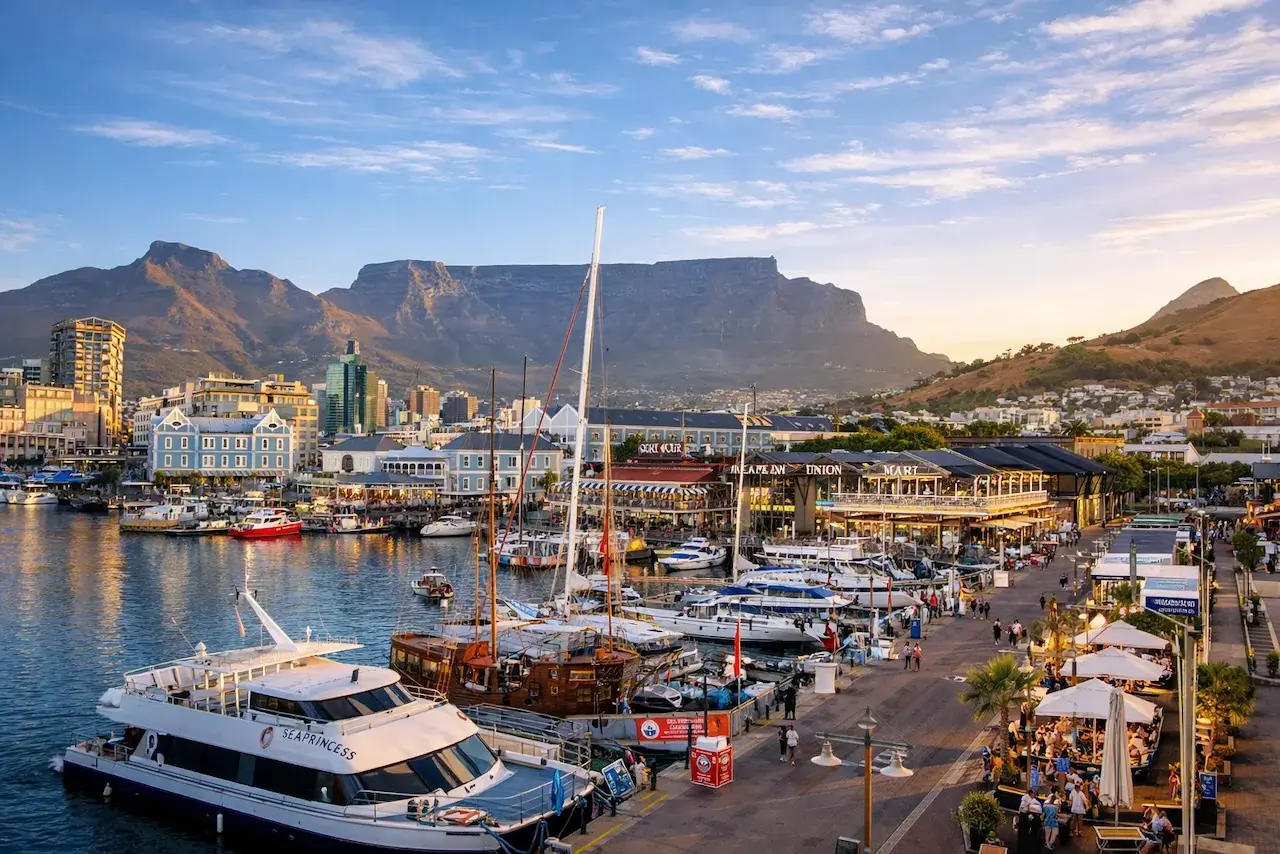
The city of Cape Town was built on the coast at the western tip of the African continent, at the foot of Table Mountain. Regarded as the mother city of the Republic of South Africa, Cape Town (or Le Cap) was founded in 1652. Its name refers to the Cape of Good Hope, which lies only some fifty kilometres from the city centre. Cape Town, the parliamentary capital of South Africa since 1910, is a city that embodies the idea of a serene cosmopolitanism. Combining business with tourism, nature with modernity, the sea with the mountains, Cape Town is a city of contrasts.

Cape Town at a glance

Cape Town combines urban energy and coastal breathing space, with an accessible city pace for making progress in English without pressure, through everyday activities.

Local weather

Local weather

Forecast loading

The weather is displayed automatically according to the city.

--:--

Destination

Local time

--:--

Local time

Your time zone

The city in brief


Population

4 772 846 inhabitants


Living environment

Large city between Table Mountain, the waterfront, beaches, urban districts and coastal biodiversity.

Map & landmarks

Capetown, or Le Cap, is a South African city on the plain of the same name, on the edge of Table Bay and False Bay, overlooked by Table Mountain and the western part of the Cape Fold Belt. It is home to a unique flora such as fynbos, a shrub that grows nowhere else. The climate in Cape Town is Mediterranean, with hot dry summers, mild wet winters and a high level of sunshine. Rain is fairly rare there, but often torrential ...

City life and landmarks

History & culture

Archaeological research shows that the region of Cape Town was already inhabited 750 000 years ago. However, the first human bones found are those of a homo sapiens-sapiens who lived there 80 000 years ago. 2000 years ago, the region of Cape Town, then peopled by a community of hunter-gatherer nomads, was confronted with the arrival of a pastoral community from Botswana. It is there that the distinction arose between two aboriginal groups: on one side the San, hunter-gatherers, and on the other the Khoikhoi, sheep farmers. The first Europeans to discover the region of Cape Town were Portuguese explorers. Searching for the route to the Indies, Vasco da Gama rounded the Cape of Good Hope in 1497. In 1691, Cape Town became a very important port colony and quickly attracted people from different backgrounds. The city went on growing until it became one of the capitals of South Africa.

what to see / what to do

The most cosmopolitan city in South Africa has something for every taste! So, between two English lessons, you will stroll around the harbour of Cap Town. This place, buzzing day and night, is one of the attractions most prized by tourists. You will climb Table Mountain on foot or take the cable car up, to admire the magnificent panoramas from its summit. You will set off to discover a unique flora and fauna on a safari or on an excursion to Duiker Island.

Find my language course in Cape Town (Le Cap)

Other cities and schools in South Africa

All our language stays