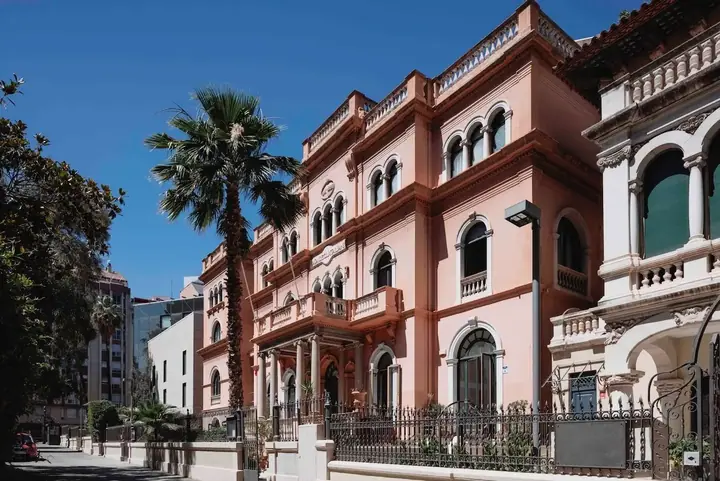
Barcelona

Language courses
in Barcelona

Build my quote

Language course

Barcelona

Spain

  • Climate : August, the warmest month: 27 to 31 °C during the day
  • Airport : Barcelona-El Prat, about 17 km away

Make progress in Spanish in a large city, with constant immersion and a structured pace of lessons.

Why choose Barcelona to learn Spanish?

Barcelona brings together urban creativity and international life, a solid setting for making progress in Spanish.

The city lets you keep a good balance between language progress, personal pace and quality of life.

Barcelona at a glance

Barcelona remains a dense city with good potential for anchoring Spanish in everyday life.

Local weather

Local weather

Forecast loading

The weather is displayed automatically according to the city.

--:--

Destination

Local time

--:--

Local time

Your time zone

The city in brief


Population

1 713 247 inhabitants


Living environment

A large Mediterranean city, between beaches, urban parks and a dense cultural life.

Map & landmarks

Located 180km from the French border on the Mediterranean coast, Barcelona is a dense city, dominated by the Collserola mountain and set among the hills of the plain bounded  by the mouths of the Besòs and Llobregat rivers. Capital of Catalonia, it is divided into 10 districts and enjoys a Mediterranean climate in a region sheltered from westerly winds by the Pyrenees. Although often sunny, its position between sea and mountains can encourage foggy spells during the autumn and in early spring. Summers there are hot, though tempered by the closeness of the sea. Winters, for their part, are generally sunny and relatively mild despite occasionally cool winds.

The map is temporarily unavailable.

City life and landmarks

history & culture

A nerve centre of the Roman colonies at the beginning of our era, Barcelona, already the capital of Catalonia, at that time an autonomous principality, became around the 12th century a renowned and much sought-after merchant empire. This prosperity lasted until the 15th century, a period during which it was absorbed by Spain. At the end of the 19th century, Barcelona was chosen to host the Universal Exhibition. Thanks to this major cultural event, the whole world discovered Catalan culture and Barcelona's reputation spread to the four corners of the Earth. Politically unstable, General Miguel Primo de Riviera took power in a coup in 1923 and set up a dictatorship that only ended with his resignation nearly 10 years later. It was not until 2006 that Barcelona became an autonomous region once again, the Community of Catalonia, with the agreement of the central government in Madrid. Barcelona is today one of the cities most visited by tourists from all over the world, drawn by a particularly dense and original artistic heritage.

things to do / to see

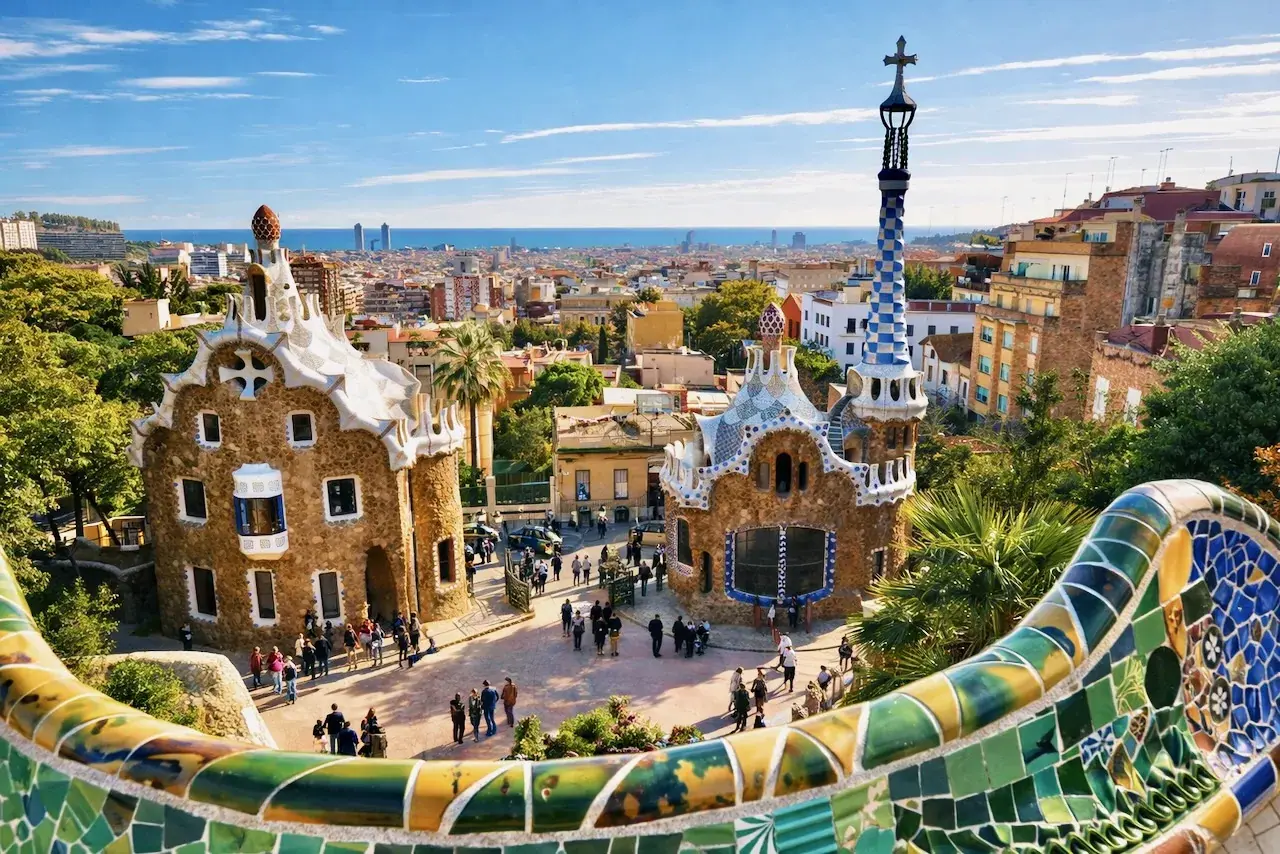
If you travel to Barcelona, you absolutely must visit the magical Parc Guëll and its astonishing, wonderful mosaics, the work of the brilliant Catalan architect Antoni Gaudi, who also fathered the famous unfinished cathedral, the ‘Sagrada Familia’. Across the city, at the turn of a house or a typical building, you will spot a great many traces of Gaudi's hand, so keep your eyes open on your walks around town! Between your Spanish lessons or in the gentle cool of summer evenings, stroll along the Ramblas. Among the street performers, taste delicious tapas or stock up on vitamins with a fresh fruit salad. Sports fans will watch a match of the famous FC Barcelona at the Camp Nou, the Olympic stadium of Barcelona. Finally, cultural walks will be all about Pablo Picasso, whose works, some of them extremely rare and painted by the artist in his earliest years, are exhibited in the museum that bears his name.

Getting there: high-speed train from Madrid: 2 h 30 min

Find my language course in Barcelona

Other cities and schools in Spain - Destinations

All our language stays