Positively Languages Covent Garden
DESTINATIONS
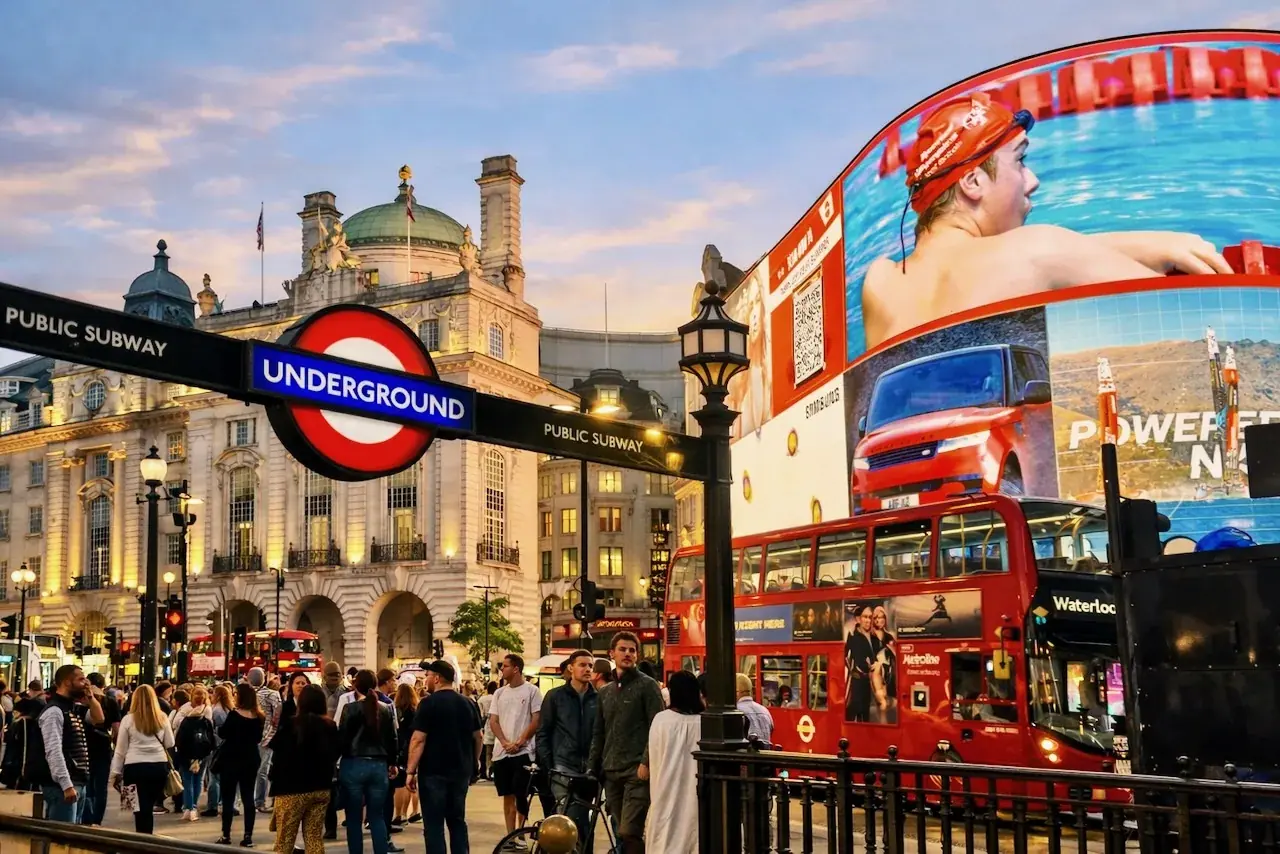
London
England
Improve your English in a large international city, with continuous immersion day to day.
London: 5 schools. Standard course, weekly starting price: cheapest school: St Giles Highgate (329.00 GBP); most expensive: St Giles (354.00 GBP); a gap of 8%. Homestay accounts for 44% of a 4-week budget on average. Last check of this page's rates: October 12, 2026.
London allows strong immersion in English in a world capital with a fast pace.
You move forward at a sustained but controlled pace, between study time, real exposure to the language and clear organisation.
Find my language course in London
5 schools available
London offers a demanding but structured environment, with many contexts for practising English at your own pace.
Local weather
Forecast loading
The weather is displayed automatically according to the city.
Destination
Local time
Local time
Your time zone
A great cultural capital, very well connected, with a vast transport network and large green spaces.
London is the capital and largest city of the United Kingdom. It lies 50km west of the estuary of the river Thames that runs through it, in the south-east of England in countryside that is mostly flat apart from a few hills. It has a typically oceanic climate, with regular, light and generally fairly prolonged rainfall throughout the year. Summers are temperate and rarely very hot, while winters are cool, although freezing temperatures are rare there, as are heavy snowfalls. Average annual temperatures generally range between 8° and 23,5°.
London's history begins with the Romans in AD 43, who built a bridge over the Thames, giving rise to Londinium. After a fire started by Queen Boudicca in 60, the city was rebuilt and became the capital of Britania. London went through major economic and population growth, becoming the largest city in Europe in the 18th century. The Windsor reign began in 1910 with George V, and the 1960s marked the era of "Swinging London". Today, London is the economic and cultural capital of Europe, home to many cultures and languages.
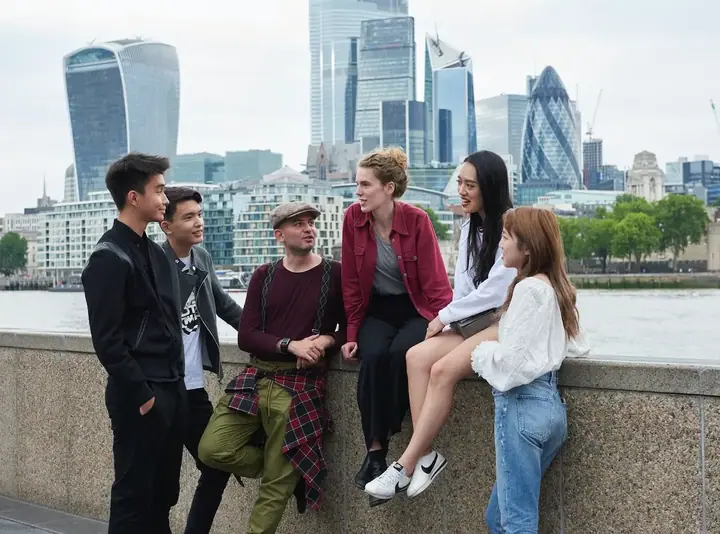
Discovering the interactive exhibits at the Science Museum. Exploring the shops and markets of Camden Town. Admiring the view from the top of the Shard, the tallest skyscraper in Europe. Relaxing in the hanging gardens of Sky Garden. Taking in the street art in the Shoreditch district. Marvelling at the street performances in Covent Garden. Joining a guided tour in the footsteps of Harry Potter. Discovering the latest food trends at Borough Market. Going to a concert at the iconic O2 Arena.
London has one of the most developed public transport networks in the world. During your language course, you will be able to get around easily and quickly thanks to the famous London underground, known as "the tube". The cost of living in London is comparable to that of Paris. A meal for two in a mid-range restaurant costs around sixty euros.