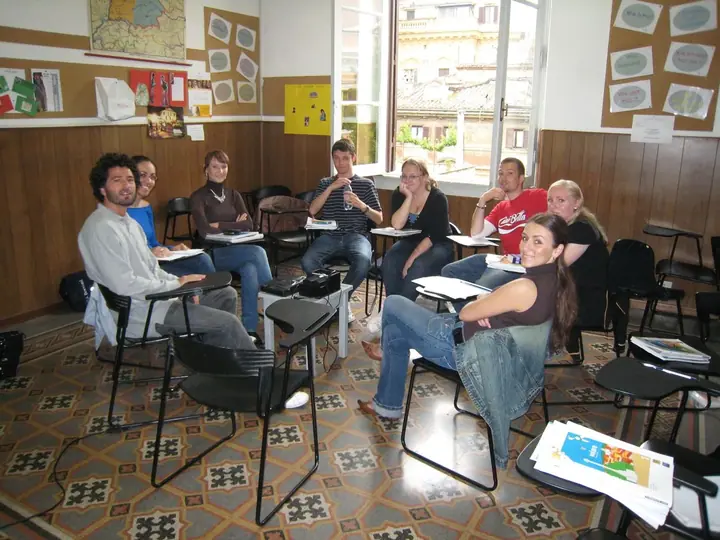
Why choose Rome to learn Italian?
Rome combines capital-city status with historical depth, a stable setting for making progress in Italian.
It is a sound choice for making serious progress while keeping your independence day to day.
Language course
Rome
Italy
Work on your Italian in a historic capital, with a rich setting that lends itself to learning.
Rome combines capital-city status with historical depth, a stable setting for making progress in Italian.
It is a sound choice for making serious progress while keeping your independence day to day.
Rome remains a stimulating historic city, with many simple opportunities to practise Italian regularly.
Local weather
Forecast loading
The weather is displayed automatically according to the city.
Destination
Local time
Local time
Your time zone
2 746 984 inhabitants
A great historic capital, between ancient sites, squares, museums, parks and lively districts.
At the confluence of the Aniene and the Tiber, the city of Rome lies in the centre of Italy, in the Lazio region. The centre of the Italian capital is 25 km from the Tyrrhenian Sea, while the historic centre spreads over seven hills. Rome is 228 km north of Naples and 276 km south of Florence. The city enjoys a Mediterranean climate, with mild winters and hot, dry summers. The sea cools summer temperatures, while the Apennine range can bring cold air currents in winter.
Ancient and complex, the history of the city of Rome begins when different tribes formed an alliance around the 7th century BC. The city was founded on the Palatine Hill. After Etruscan rule, the Republic extended its dominion over Italy and the Mediterranean. Rome became the centre of the world and the most populous city, until the decline of the Empire, suffering many sackings. Thanks to the papacy, the Renaissance was a prosperous era for the city, and monuments flourished. In 1870, Italian unification made Rome its capital. Visitors discover these buildings, witnesses to a long history.
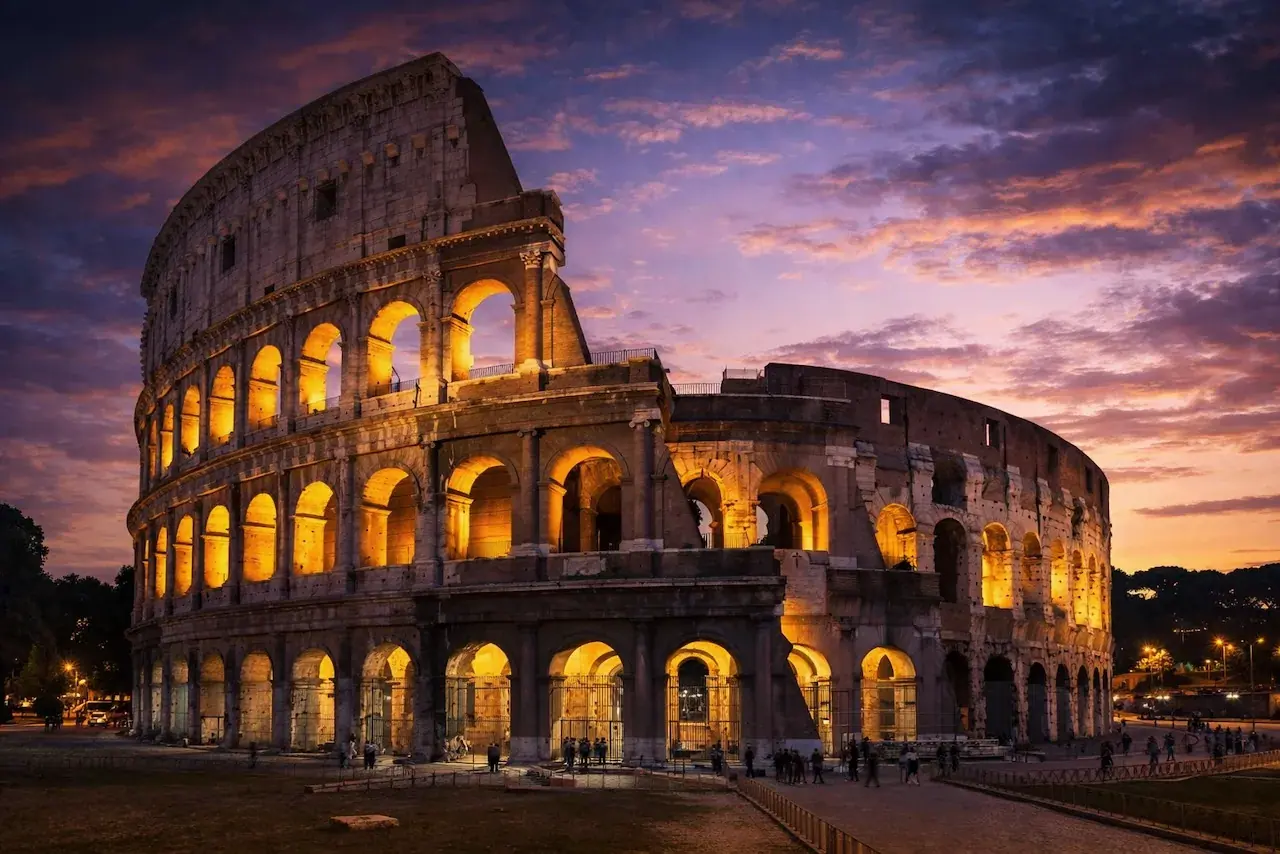
The surrounding hills are the natural heritage on which Rome was built. A place of rest in this urban world, the Pincio, reached from the Piazza del Popolo, is a pleasant walk, with its fountains and its obelisk. Historic sites and religious buildings abound in Rome: Colosseum, Pantheon, Roman Forum, St Peter's Basilica, Basilica of St John Lateran, Piazza Navona… After a football match at the Stadio Olimpico, discovering Italian cooking, in the trattorias or the pizzerias, is a must: fresh vegetables, cuts of meat and pecorino. The festivities are above all religious, but notably include the international film festival.
The city's main airport, Leonardo da Vinci Rome Fiuminico, is south-west of the city centre. The Italian capital is also served by rail lines, long-distance bus routes and even ferries. For shopping, visitors can head to Piazza di Spagna, Via del Corso, Travtevere, Porta Porteseest, or Viale Marconi.
Climate: August: sea at 25.0 °C on average
1 school available